Every purity quiz on the internet — this one included — traces back to a single page of a student newspaper. On 7 March 1924, The Rice Thresher, the student newspaper of Rice University in Houston, Texas, published the results of an informal ten-question survey under the headline “Rice Girls Not Quite Half Bad”. A century later, that survey has become one of the most repeated rituals online. This page tells the story from the primary sources: the original issues themselves, held today in the Rice University Digital Collections at Fondren Library — and it is honest about what is public domain, what is not, and what no source could confirm.
The 1924 original: 10 questions, 119 students, average 62
The first version was small. The Thresher, Vol. 9, No. 22, page 1, 7 March 1924, reported a ten-question survey taken by 119 female undergraduates at Rice. Each question was worth 10 points, and the average score was 62. No individual creator is named anywhere: the Portal to Texas History record for the issue lists the creator as Unknown, and the survey is best understood as a collective Thresher piece — beware any site that names a single inventor, because no source found does.
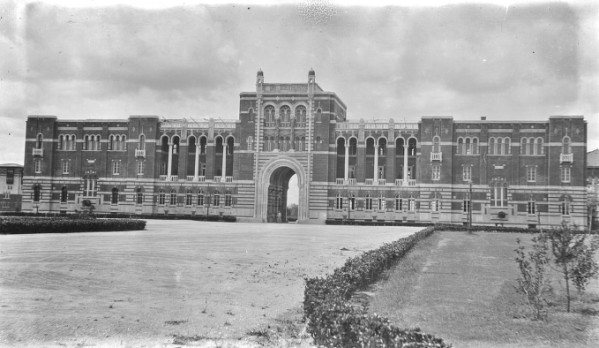
“Rice Girls Not Quite Half Bad”
— Headline, The Thresher, Vol. 9, No. 22, 7 March 1924, p. 1 (public domain — see the copyright section below)
A few of the original questions survive as short quotes in secondary sources — among them “Have you ever been drunk?”, “Did you ever dance conspicuously?” and “Have you ever done anything that you wouldn’t tell your mother?” Secondary sources add that only two of the 1924 questions — about cheating and being drunk — survive in today’s list. Treat that detail as secondary rather than verified: the archive scan’s machine-read text is garbled, so we do not quote from it directly.
What was it for? Not science. The test was an informal student-newspaper survey that became part of Rice’s Orientation Week (O-Week) bonding tradition. The current Thresher-published test site describes it as something that “…has historically served as a segue from O-week to true college life at Rice.”
It was never a university-administered psychological test, and it has never been scientifically validated. Rice University does not administer, grade or endorse any online version of it — the publisher is the student newspaper, not the university.
The timeline, from the sources
- 7 March 1924 — the 10-question survey: The Rice Thresher, Vol. 9, No. 22, publishes “Rice Girls Not Quite Half Bad”: a ten-question survey of 119 female undergraduates, average score 62. The issue is preserved in the Rice University Digital Collections (identifier thr19240307), held by the Woodson Research Center in Fondren Library.
- 1974 — the test resurfaces: The ten-question test resurfaced, and men began taking it too. (Reported by The Trail, University of Puget Sound, 11 April 2024.)
- 1 April 1988 — the 150-question version: The Rice Thresher, Vol. 75, No. 24.5, publishes “The New and Improved 1988 Rice Trasher Purity Test” (p. 8) — a 150-question list, per the citation tied to this issue. One honest note: some secondary quiz sites say a 100-question format appeared in 1988 instead. The 150 figure is the one tied to a citable issue, so we use it — and flag the disagreement rather than hide it.
- 1998 — the wording changes (reported): Secondary sources report that the gendered wording was replaced with “MPS — Member of the Preferred Sex”. This detail is reported by secondary sites only and was not verified against a Rice scan, so we present it as reported, not confirmed.
- August 2012 — the modern 100-question version goes online: In 2011, the Thresher’s Backpage editors refused to publish the test because it contained references to non-consensual and homosexual acts. In August 2012 they published a rewritten, more inclusive version and put it online at ricepuritytest.com — the ancestor of the 100-question list most people know today. (We cite the month only: sources disagree on the exact August day.)
- 23 August 2017 — the tradition looks back at itself: Emily Abdow’s “Purity Test evolves, spreads beyond Rice” in The Rice Thresher becomes the main secondary history of the tradition, reporting how the test spread far beyond Rice. No live Thresher URL for the article was found in our research, so we cite it by author, title and date rather than guess a link.
Is there a Rice library “paper” about the test?
Plainly: no Rice-held scholarly paper or thesis about the test was found — and that open question matters, because it corrects a common confusion. What the Rice archive holds is better than a paper about the test: it holds the primary source itself — the digitised Thresher issues of 1924 and 1988, in the Rice Thresher collection (1916 to Spring 2021) at the Woodson Research Center, Fondren Library. The one honours thesis sometimes linked to the test — by Jenna Hlavaty, class of ’24 — is a University of Puget Sound thesis, not a Rice document. The scholarly treatment that does exist is folklorist, not Rice-published: Alan Dundes & Carl R. Pagter’s Work Hard and You Shall Be Rewarded (1975) discusses purity tests as “questionnaire parody”. So the authority for everything on this page is the archive record itself, linked in the sources below — not a paper that does not exist.
Copyright: what is public domain — and what is not
Some clone sites claim “the Rice Purity Test is public domain”. That is only true of the 1924 issue, and getting this wrong is how sites end up reproducing a copyrighted list. The split, version by version:
| Version | Status | Basis |
|---|---|---|
| 1924 — the 10-question survey | Public domain in the US — free to quote and reproduce | Rice’s own record for this issue states: “This material is in the public domain and may be freely used.” It also fits Cornell’s public-domain chart: US works published before 1931 are in the public domain. |
| 1988 — the 150-question version | Not public domain — rights belong to Rice University | The Rice Digital Collections record says rights to this material belong to Rice University, and that uses beyond the spirit of fair use require permission. The same record also carries a Creative Commons BY 3.0 line for the digital version — an internal tension we do not rely on as a licence to republish the list. |
| 2012 — the current 100-question version | Not public domain — treat as under copyright | Published in 2012 by the Thresher’s Backpage editors. No public-domain or open-licence statement for this version was found. |
| The facts themselves — dates, 119 students, average 62 | Not copyrightable | Facts and ideas are not protected by copyright — only specific wording is. Anyone may state the facts in their own words, with a citation. |
Short attributed quotes — a headline, a sentence or two, quoted for history and commentary — sit in the classic low-risk zone of US fair use. Reproducing all 100 modern questions is the opposite end: the whole work, in a directly competing quiz. That is why this site has never done it.
“Caution: This is not a bucket list. Completion of all items on this test will likely result in death.”
— The disclaimer on the Thresher-published test, quoted here briefly, with attribution, for commentary
How Purity Meter uses this history
Purity Meter asks 100 original questions written for this site. They cover similar themes — dating, intimacy, substances, rule-breaking — but they are not The Rice Thresher’s wording, and scores here are not comparable to the original test. Our name, design and categories are our own; “Rice” appears on this site only as a factual, historical reference, and we use no Rice shield, seal, logo or branding. What we take from 1924 is the idea and the sourced story on this page — linked out to Rice’s own archive, because pointing readers to the primary source is what author authority actually looks like. This page is research, not legal advice.
Independent site. Purity Meter is not affiliated with, endorsed by, or connected to Rice University or The Rice Thresher. For entertainment only; not a scientific, psychological or medical assessment.
Sources & further reading
- The Thresher, Vol. 9, No. 22, 7 March 1924 — Rice University Digital Collections (identifier thr19240307). Rights note on the record: “This material is in the public domain and may be freely used.” — Rice Digital Collections
- The Rice Thresher, Vol. 75, No. 24.5, 1 April 1988 — Rice University Digital Collections (identifier thr19880401). Rights on the record belong to Rice University. — Rice Digital Collections
- The Rice Thresher collection, 1916–Spring 2021 — Rice University Digital Collections; printed issues held by the Woodson Research Center, Fondren Library. — Rice Digital Collections
- The Thresher, Vol. 9, No. 22 (Portal to Texas History) — UNT Libraries, provided by the Rice University Woodson Research Center; creator listed as Unknown. — Portal to Texas History
- Rice University — official site
- The Rice Purity Test, as published by The Rice Thresher — the 2012 online version and its O-Week description. — ricepuritytest.com
- “Purity test” — Wikipedia — citing the 1924 and 1988 Thresher issues, Lauriello (August 2012) and Abdow (23 August 2017).
- “The Impure Truth About the Rice Purity Test” — The Trail, University of Puget Sound, 11 April 2024 — the 1974 resurfacing and the 1924 average.
- Rice University Archives, Fondren Library — the William Ward Watkin and Annie Ray Watkin University Archives, which preserve the Rice Thresher.
- Copyright Term and the Public Domain in the United States — Cornell University Library — US works published before 1931 are in the public domain. — Cornell University Library
- More Information on Fair Use — U.S. Copyright Office — the four fair-use factors, judged case by case. — U.S. Copyright Office
- Brand Policies — Rice University — Rice’s name and marks require permission and are not used on this site. — Rice University
All sources above were verified live on 12 November 2026 for the research behind this page. Two things could not be verified and are flagged where they appear: direct Thresher URLs for the 2012 and 2017 articles (cited by author, title and date instead), and the 1998 wording change (reported by secondary sources only).
Now take the modern version: 100 original questions, a live meter, five categories and a result card — the 1924 idea, rebuilt for your phone.
Keep reading
- What is a Rice purity test? History, scoring and how it works
- Purity Meter vs Rice Purity Test — what is different?
- Rice purity score: what your number means and why it varies
Adults 18+ · For fun only — not a psychological test.